US Seen as a Less Reliable Partner: S&P Global Ratings Chief Economist Paul Gruenwald

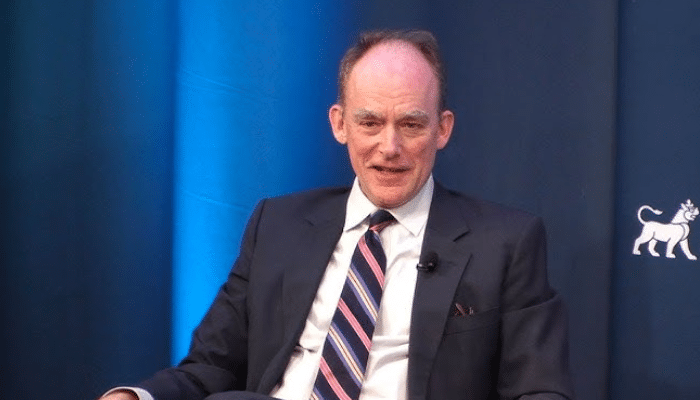
S&P Global Ratings’ chief economist Paul Gruenwald visited India recently and spoke with TOI about global economic uncertainty, US tariff impacts, and India’s strong growth outlook. His insights reveal how global economic narratives have shifted over the past six months.
Global Economy: From Downside Risks to Data Centre-Driven Growth
According to Gruenwald, concerns about tariffs dominated discussions earlier this year. However, the global narrative has now changed. Today, economists are more focused on upside risks from data centres, new investments, and a capex boom.
While policy uncertainty in the US still affects the rest of the world, the overall macroeconomic outlook looks better than it did just a few months ago.
Why Economists Overestimated US Tariff Impacts
Gruenwald said the earlier tariff concerns were overestimated due to three main reasons:
- Lower-than-expected tariff rates
The final tariff rates announced by the Trump administration were reduced significantly. The effective US tariff rate stabilized at around 17%, instead of the previously expected 30%. - Minimal retaliation from other countries
Most nations accepted higher tariffs as the cost of doing business with the US. Only China responded with tit-for-tat measures during the first tariff round. Since then, retaliation has been limited. - Extensive exemptions and absorbed costs
Although statutory tariffs sit at 17%, the actual effective tariff rate is closer to 10% due to exemptions. Most of the cost is being absorbed by wholesalers, importers, and retailers through margin compression rather than being passed to consumers.
So far, there has been no significant reshoring of manufacturing to the US. Instead, the tariffs function largely as a tax on American businesses and households.
India’s Economy: Strength and Strategic Diversification
India, along with Brazil, still faces unresolved tariff issues with the US. However, Gruenwald suggests an agreement may be reached soon, reducing uncertainty.
He also noted that the US is increasingly viewed as a less reliable trade partner, which is pushing many countries—including India—to diversify their economic and investment relationships. India benefits from being a relatively closed economy, making it less dependent on US trade.
This global shift marks a broader move away from the traditional Washington Consensus, with many nations reassessing their international strategies to manage geopolitical risk.
How Global Investors View India
Gruenwald emphasized that India is currently the fastest-growing major emerging market. The global “growth baton” has already passed from China to India.
India’s long list of economic tailwinds and structural strengths offers a long runway for sustained growth. With steady compounding, India is positioned for a bright future.
Can India Sustain 6%–7% Annual Growth?
A long-term growth trajectory of 6.5% per year is not only realistic but also impressive. Gruenwald noted that while China relied heavily on capital investment rather than productivity—often with mixed results—India can deliver strong outcomes if it maintains structural reforms and stable growth momentum.
Growth between 6% and 7% would be a solid achievement for any emerging economy, and India is well on track.