“Mother of All Deals”: India and EU Forge $27 Trillion Free Trade Agreement

Historic India-EU Trade Pact Concludes After 20 Years
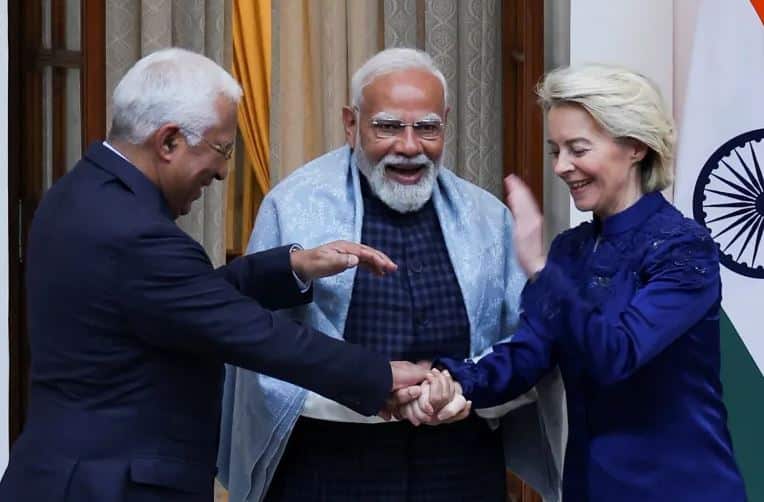
India and the European Union have finalized a landmark free trade agreement, hailed by both sides as the “mother of all deals.” The agreement, spanning nearly two decades of negotiations, comes amid ongoing global trade tensions and U.S. tariff pressures.
The deal covers a population of around 2 billion people and creates a combined economic market valued at nearly $27 trillion, representing about 25% of global GDP.
European Commission President Ursula von der Leyen described the pact as a historic milestone, stating, “We have created a free-trade zone of two billion people, with both sides set to benefit.”
Indian Prime Minister Narendra Modi emphasized the agreement’s potential to boost domestic manufacturing, services, and foreign investment.
Key Highlights of the India-EU Trade Deal
The new agreement is India’s largest and most comprehensive trade pact, encompassing goods, services, and investments across the EU’s 27-nation customs union. Key benefits include:
- Goods: Tariff reductions across sectors such as textiles, pharmaceuticals, machinery, steel, petroleum products, and electrical equipment.
- Services: EU gains access to 144 Indian services subsectors, while India opens 102 sectors to EU firms, including finance, maritime, and telecommunications.
- Automobile Industry: India will gradually reduce tariffs on EU car imports from 30–35% down to 10%, excluding vehicles under €15,000. Electric vehicles will remain protected for five years to support domestic manufacturers.
- Tariff Savings: The deal is expected to save EU businesses up to €4.74 billion annually in duties. India will immediately benefit from zero tariffs on 90% of exports, including seafood, chemicals, textiles, leather, gems, and jewelry.
Strategic Benefits for India and the EU
The pact not only strengthens economic ties but also positions both parties to reduce dependence on the United States amid rising tariffs:
- India-EU goods trade has grown from $74 billion in 2020 to $136 billion in 2025. The deal aims to reach $200 billion by 2030.
- Services trade has also doubled in five years, with India exporting $44 billion in services in 2024–25, primarily IT and business consulting.
- The agreement offers both sides an opportunity to diversify trade partners and bolster strategic geopolitical cooperation.
Geopolitical Implications Amid U.S. Trade Tensions
The India-EU agreement emerges against a backdrop of strained relations with the U.S.:
- India faces 50% U.S. tariffs, partly due to continued purchases of Russian oil.
- EU tensions with Washington have also risen, particularly over disputes involving Greenland and U.S. tariff threats.
Experts say the India-EU pact signals a new era of strategic economic alignment. Harsh Pant of the Observer Research Foundation noted, “There is a quite extraordinary geopolitical realignment between India and the EU. The Trump effect has accelerated this convergence.”
While the White House has criticized the deal, India maintains that it is part of a broader strategy of “strategic patience,” diversifying trade and investment opportunities globally.
What’s Next
The final draft of the agreement still requires legal approval in Brussels and New Delhi and may become operational next year. Both sides continue discussions on steel export quotas and carbon border adjustments to ensure fair and sustainable trade practices.
“This agreement strengthens confidence in India for every business and every investor in the world,” Modi said. “India is working extensively on global partnerships in all sectors.”