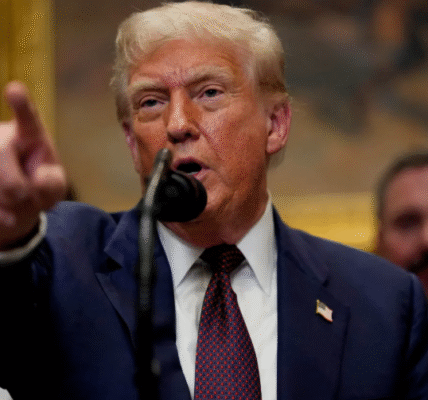

President Trump’s favorite word may be “tariffs,” and his latest pre-Christmas address reminded the world why. Trump claimed that tariffs were boosting jobs, wages, and economic growth in the United States. While these assertions remain hotly debated, there is little doubt that tariffs have already reshaped the global economy—and will continue to do so into 2026.
Global Growth: Slowing But Resilient
The International Monetary Fund (IMF) predicts that the global economy will grow at 3.1% in 2026, slightly lower than its 3.3% forecast a year ago. IMF Managing Director Kristalina Georgieva described the situation as “better than we feared, worse than it needs to be,” noting that global growth has fallen from a pre-COVID average of 3.7%.
Other forecasts for 2026 are even more pessimistic, reflecting ongoing uncertainties caused by trade frictions, geopolitical tensions, and lingering effects of tariffs.
Tariffs and Trade: Avoiding Disaster, But Not Risk-Free
Despite fears of a trade disaster, the impact of Trump’s tariffs has been mitigated in some ways. Maurice Obstfeld, a former IMF chief economist, explains that many countries chose not to retaliate strongly against the US, and China’s decisive pushback led to a quick US response, preventing a full-blown trade war.
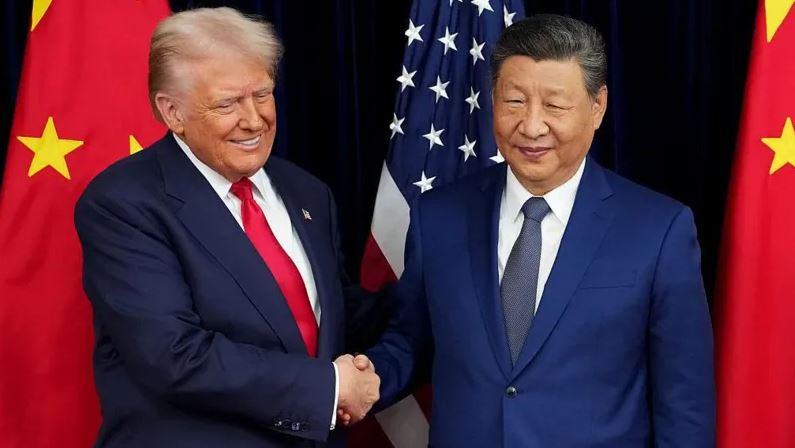
However, tariffs remain a thorny issue. After multiple rounds of negotiations, the US and China still maintain more trade barriers than when Trump began his second term. These tariffs raise costs for businesses, introduce uncertainty, and make long-term planning difficult.
Exemptions and loopholes have softened the blow for some companies. Nations like the UK, South Korea, and Japan have successfully navigated these complexities, negotiating trade deals with the US. Others will try to do the same in 2026.
US Economy: Growth Amid Tariffs
The US economy has shown surprising resilience. Between July and September, it expanded by 4.3%, its fastest growth in two years. Senior economist Aditya Bhave attributes part of this to consumer spending and the country’s ongoing investment in AI and technology.
However, tariffs are contributing to inflation—estimated at 0.3% to 0.5% of the US 2.7% inflation rate in November. This is significant because the US accounts for 26% of global economic activity, meaning domestic inflation pressures ripple across the world.
China and Global Trade: Shifting Patterns
Trump’s tariffs have also reshaped trade flows. While the US-China trade value has declined for the third consecutive year, China has increased exports to Europe. Beijing forecasts that its economy will reach $20 trillion in 2026 and emphasizes a willingness to work with global partners, despite ongoing trade tensions with the US.
Key issues remain unresolved, including access to high-end US technology and rare earth metals. James Zimmerman of the American Chamber of Commerce in China notes that while expectations for progress are low, sustained dialogue remains critical.
Energy and Shipping: Unexpected Boosts
Oil prices are expected to fall around 8% in 2026, according to Goldman Sachs, driven by strong US and Russian production. Additionally, the partial reopening of shipping routes through the Red Sea could ease global transportation costs, supporting trade and economic activity.
Europe, meanwhile, is reassessing its reliance on cheap Chinese imports, signaling potential policy changes that could influence global supply chains.
The Road Ahead: Tariffs Aren’t Going Away
US Trade Representative Jamieson Greer has emphasized that tariffs are integral to Trump’s re-industrialization strategy. While manufacturing jobs in the US have slightly declined, tariffs have encouraged investment in domestic production, from cars to pharmaceuticals.
Economists like Obstfeld believe tariffs will remain a key policy tool. “I don’t think tariffs are going to go away as a matter of policy or of discussion,” he notes, underscoring that trade frictions are likely to shape global economic decisions well into 2026.