
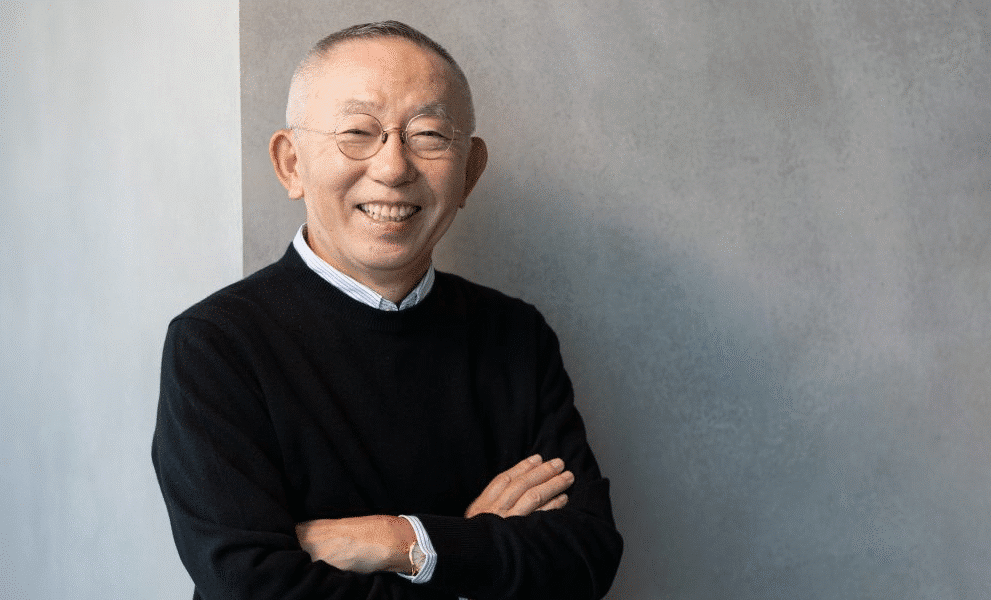

Tadashi Yanai (柳井 正) is a Japanese billionaire entrepreneur, investor, and one of Asia’s most influential business leaders. As Chairman, President, and CEO of Fast Retailing Co., Ltd., the parent company of global apparel giant Uniqlo, Yanai has reshaped the international retail landscape through visionary leadership, strategic scaling, and economic foresight. His influence extends beyond fashion into global supply chain management, international expansion strategy, and economic discourse on trade and tariffs.
Early Life and Entry into Business
Born on February 7, 1949, in Ube, Yamaguchi Prefecture, Japan, Tadashi Yanai graduated from Waseda University with a degree in Economics and Political Science. After a brief stint working at a supermarket, he joined his father’s Ogori Shoji tailoring business, where his entrepreneurial instincts began to take shape.
In 1984, Yanai opened the first Uniqlo store in Hiroshima originally named Unique Clothing Warehouse focusing on simple, high‑quality casual wear at accessible prices. In 1991, he rebranded the company as Fast Retailing Co., Ltd., marking the beginning of a transformational global strategy.
Building a Global Retail Powerhouse
Under Yanai’s leadership, Fast Retailing has grown into a global retail powerhouse, with more than 3,500 stores across Asia, Europe, North America, and beyond. The company’s flagship brand, Uniqlo, is recognized for its LifeWear concept versatile, functional apparel designed for everyday life.
Fast Retailing’s portfolio also includes other major fashion labels such as Theory, Helmut Lang, J Brand, Comptoir des Cotonniers, and Princesse Tam‑tam, demonstrating strategic diversification within the global apparel market.
Economic Influence and Market Leadership
Today, Tadashi Yanai is often described as Japan’s richest person, with an estimated net worth exceeding $50 billion ranking among the top 30 wealthiest individuals globally.
His leadership has had a profound economic impact:
- Retail Innovation: Yanai championed SPA (Specialty Store Retailer of Private Label Apparel) business models, optimizing Fast Retailing’s design, production, and sales systems to improve quality and cost efficiency.
- Global Expansion Strategy: Uniqlo’s international presence has disrupted traditional fashion market dynamics by combining affordability with quality, enabling the brand to compete effectively with global competitors like Inditex (Zara) and H&M.
- Strategic Real Estate Investments: Most recently, Yanai’s family office invested in prime retail real estate holdings in Milan, Amsterdam, and London, strengthening Uniqlo’s global footprint in key metropolitan markets.
Fast Retailing continues to post record profits, expanding sales and store counts even during challenging global conditions, reflecting robust operational leadership and economic resilience.
Leadership Style and Corporate Philosophy
Yanai’s leadership philosophy emphasizes innovation, simplicity, and efficiency, blending Japanese managerial principles with global market sensibilities. He often describes Uniqlo not merely as a fashion company, but as a technology‑driven apparel business focusing on material innovation, supply chain optimization, and customer‑centric product development.
His personal approach to leadership where decision‑making is both centralized and agile has enabled Fast Retailing to adapt quickly to changing consumer trends and economic pressures.
Economic Views and Public Influence
Tadashi Yanai is not shy about speaking on economic policy. In 2025, he publicly criticised U.S. tariff policies, warning that widespread trade barriers could have significant negative effects on global trade and even “lead to bankruptcy” for major markets. His statements reflect his broader engagement in global economic discourse and concern for open international trade systems.
Philanthropy and Leadership Beyond Commerce
Yanai has also made notable philanthropic contributions. In 2011, he donated 1 billion yen to support victims of the Tōhoku earthquake and tsunami. Additionally, he established the Yanai Tadashi Foundation, which provides scholarships and support to Japanese students pursuing education abroad, strengthening cross‑cultural academic leadership.
Legacy and Impact
Tadashi Yanai’s journey from managing his father’s tailoring shop to building one of the world’s largest retail conglomerates illustrates transformational leadership and strategic economic influence. His success story is not merely one of financial achievement; it highlights the power of visionary strategy, global expansion, operational excellence, and the ability to influence broader economic trends through business innovation.


