
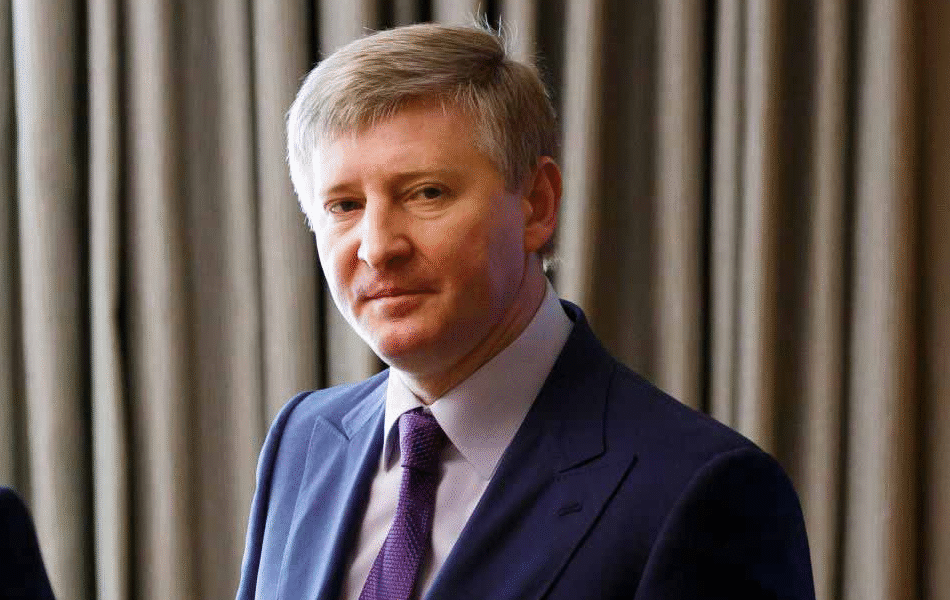
Rinat Akhmetov: Economic Leadership and Industrial Influence in Ukraine and Beyond

Rinat Leonidovych Akhmetov (born 21 September 1966) is a Ukrainian billionaire, industrial magnate, and founder of System Capital Management (SCM) the largest diversified financial and industrial group in Ukraine. Akhmetov is widely recognized as one of Eastern Europe’s most influential economic leaders, having built a sprawling business empire that drives significant portions of Ukraine’s industrial economy while shaping broader economic trends. As of 2025, he remains the wealthiest individual in Ukraine and an economic force whose decisions and investments influence market outcomes, employment, and national development.
Early Life and Entrepreneurial Beginnings
Born in Donetsk, Ukrainian SSR, to a working‑class family his father was a coal miner and his mother a shop assistant Akhmetov’s early life was rooted in Ukraine’s heavy‑industry heartland. After earning a degree in economics, he began his business career in the early 1990s in the wake of the Soviet Union’s collapse, initially working in coal processing and metal trading before expanding into broader industrial ventures.
Akhmetov’s rise parallels Ukraine’s transition from a centrally planned economy to a market‑oriented system, a shift that created opportunities for ambitious entrepreneurs to acquire and restructure formerly state‑owned assets.
SCM Group: Industrial and Economic Powerhouse
In 2000, Akhmetov founded System Capital Management (SCM), a holding company that became the central structure for his diversified investments. Under his leadership, SCM evolved into the largest private investment group in Ukraine, employing roughly 200,000 people across industries such as metallurgy, coal mining, energy, telecommunications, finance, real estate, transport, and agriculture with operations extending across Europe and other global markets.
The key assets of SCM include:
- Metinvest — a leading mining and metallurgical business.
- DTEK — a major energy generation and infrastructure company.
- First Ukrainian International Bank — a significant financial institution.
- Ukrtelecom — a key telecommunications provider.
- ESTA Holding — real estate.
- Portinvest, Lemtrans, Transinvest — transport and logistics networks.
- HarvEast Holding — agriculture.
- FC Shakhtar Donetsk — one of Ukraine’s most celebrated football clubs.
SCM’s operations have been a major contributor to the Ukrainian state’s fiscal revenues. In 2022, SCM enterprises paid about ₴90.2 billion in taxes, representing approximately 22.6 % of all tax revenues to the national budget making SCM the country’s largest private taxpayer even amid wartime conditions.
Economic Leadership in Adversity
Akhmetov’s economic leadership has been tested in recent years by geopolitical turmoil. Since the full‑scale Russian invasion of Ukraine in 2022, many of SCM’s assets especially in steel production and energy have suffered damage, destruction, or occupation, significantly affecting company valuations and industrial capacity. Despite these challenges, SCM maintained capital investment and continued operations, including a surge of over 50 % in capital investment in 2023 to modernize energy infrastructure and support industrial output.
By late 2025, SCM enterprises continued to contribute significantly to Ukraine’s economy, investing in reconstruction, infrastructure, and public services, while being one of the biggest contributors to national tax revenues.
Economic Influence and Wealth Dynamics
Akhmetov has consistently ranked as Ukraine’s richest individual. As of July 2025, his net worth was estimated at US $7.9 billion, placing him among the top echelons of global wealth.
His economic influence extends beyond wealth alone SCM’s scale and reach make it a key employer, investor, and infrastructure provider in Ukraine. This influence shapes labor markets, industrial capacity, and investment patterns across sectors such as energy, steel, finance, and digital communications.
Philanthropy and Societal Role
In addition to corporate leadership, Akhmetov has established significant philanthropic initiatives through the Rinat Akhmetov Foundation and SCM-related programs. These efforts have provided humanitarian aid, medical supplies, food, and other essential services to millions of Ukrainians affected by conflict and economic hardship. As of October 2025, SCM, the Foundation, and FC Shakhtar Donetsk collectively provided $350 million in aid to the Ukrainian military and civilians.
During crises, the foundation and SCM businesses have delivered food packages, medical supplies, and direct support to communities, reinforcing Akhmetov’s role as a leader with economic and social impact.
Political Engagement and Controversies
Akhmetov has also been involved in politics, serving in the Ukrainian parliament in the mid‑2000s, though he later described this as a mistake. His political engagement reflects the intertwined nature of business and governance in transitional economies like Ukraine’s.
Over the years, Akhmetov has faced various controversies around business practices and oligarchic influence in Ukrainian politics. Some critics and analysts have argued that concentrated economic power among a few individuals can create structural inefficiencies or political dependency, though his supporters emphasize his role in maintaining industrial continuity and economic stability.
Legacy and Global Economic Influence
Rinat Akhmetov’s leadership exemplifies how industrial diversification and strategic investment can shape a country’s economic landscape. From rebuilding industries after the Soviet era to navigating wartime disruptions, his role reflects the profound economic influence a private investor can exert on national development, employment, and market resilience.
Despite geopolitical challenges, Akhmetov’s stewardship of SCM underscores the potential for business leadership to drive economic growth, support public revenue, and contribute to national reconstruction making him a significant figure in global economic leadership discussions.